
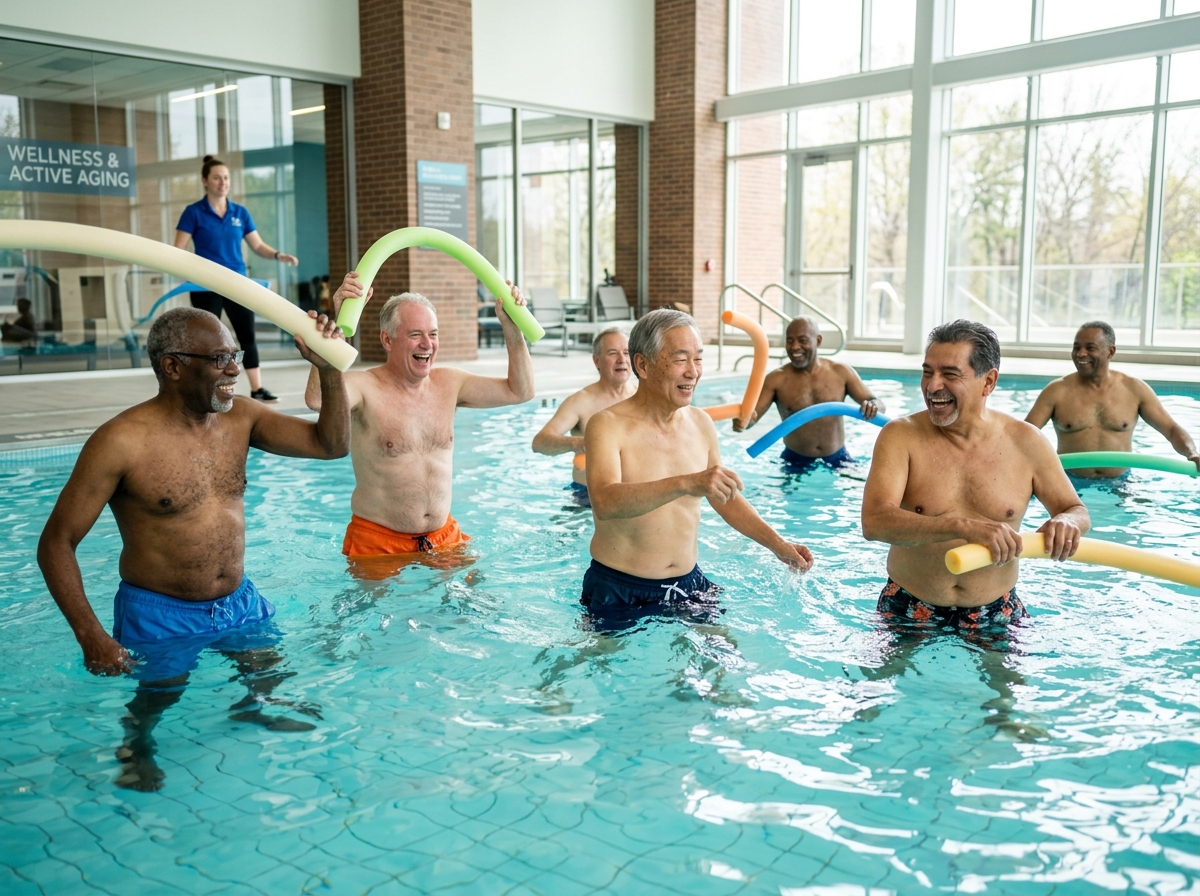
Fluid Movement: The Healing Power of Aquatic Exercise
Water exercise is a great way to improve your health and fitness. Swimming and other water-based exercises can strengthen your heart and muscles while putting less stress on your joints than many land-based exercises. This makes water exercise a good option for people who want to stay active while reducing the impact on their joints.
For older menparticularly those navigating the physical toll of prostate cancer treatments, chronic joint pain, or metabolic conditionsthe pool represents a sanctuary of movement. The NIA classifies aquatic exercise primarily as an aerobic activity, but the natural density of water means every push, pull, and step doubles as mild strength training. It is the ultimate full-body workout, accessible to virtually every fitness level, from complete beginners to lifelong athletes.
At TheBrightPath Foundation, we strongly advocate for aquatic therapy as a central component of active recovery. The unique physical properties of waterbuoyancy, hydrostatic pressure, and thermodynamicscreate an environment where the body can heal, strengthen, and thrive simultaneously.
The Science: Core Health Benefits of the Water
Working out in the water changes the physical rules of gravity and resistance. This environmental shift unlocks a wide array of physiological benefits that are difficult to replicate in a traditional gym setting.
Visual Infographic: The Biomechanics of Aquatic Therapy
(Buoyancy, Joint Offloading, Hydrostatic Pressure, Aerobic Output)
1 Unmatched Joint Protection (Buoyancy)
The most significant advantage of aquatic exercise is buoyancy. When submerged to the waist, your body bears only 50% of its weight; submerged to the chest, that drops to roughly 25%. This dramatic offloading of weight drastically reduces the compressive forces on your spine, hips, and knees. According to the CDC, this makes swimming an ideal intervention for the 50 million adults living with osteoarthritis or rheumatoid arthritis, allowing them to exercise vigorously without exacerbating joint pain.
2 Superior Cardiovascular Conditioning
Swimming is one of the most effective aerobic exercises available. Because water is approximately 800 times denser than air, your heart must work harder to pump blood to all the active muscle groups. However, the hydrostatic pressure of the water actually assists with venous return (pushing blood back to the heart), which can lower your resting heart rate over time. Regular swimming lowers blood pressure, improves endothelial function, and significantly reduces the risk of coronary heart disease.
3 Full-Body Muscular Endurance
Unlike jogging or cycling, which primarily target the lower body, swimming engages almost every major muscle group simultaneously. The latissimus dorsi (back), deltoids (shoulders), pectorals (chest), and core must work in unison with the glutes and legs to propel you forward. The constant resistance of the water tones muscles symmetrically and builds profound muscular endurance without the micro-tears associated with heavy weightlifting.
4 Profound Mental Health and Mood Enhancement
The CDC highlights that water-based exercise improves mental health in deeply impactful ways. The sensory deprivation of having your ears submerged, combined with the rhythmic, repetitive nature of breathing and stroking, induces a meditative state similar to yoga. Swimming has been clinically shown to decrease anxiety, alleviate symptoms of depression, and significantly improve mood in both men and women.
5 Temperature Regulation and Metabolism
One of the barriers to exercise for older adults is the discomfort of overheating. Water is an excellent conductor of heat, pulling excess thermal energy away from the body much faster than air. This allows you to exercise at higher intensities for longer periods without the physical stress of heat exhaustion. Additionally, maintaining body temperature in cooler water naturally elevates your metabolic rate, aiding in weight management.
Categorizing Aquatic Exercise: Ways to Train
You do not need to be an Olympic lap swimmer to reap the benefits of the pool. There are numerous modalities of aquatic exercise suited to different mobility levels and goals:
waves Lap Swimming
Continuous swimming (freestyle, breaststroke, backstroke) is the gold standard for cardiovascular conditioning. It requires technique and rhythmic breathing, offering the highest caloric burn.
groups Water Aerobics
Instructor-led group classes usually held in shallow water. These classes focus on jumping, kicking, and using water dumbbells, offering a fantastic blend of cardio, strength, and socialization.
directions_walk Deep Water Running
Wearing a flotation belt in the deep end, you mimic the biomechanics of running without ever striking the ground. Highly favored by athletes recovering from stress fractures or severe arthritis.
self_improvement Aquatic Therapy
Gentle, targeted movements often performed in warm-water pools (90-94°F) under the guidance of a physical therapist. Designed specifically for rehabilitation, pain management, and restoring range of motion.
Getting Started: Safety and Hygiene Protocols
The CDC emphasizes that while swimming is incredibly healthy, communal water environments require strict adherence to safety and hygiene protocols to prevent Recreational Water Illnesses (RWIs) and physical accidents.
- shower Pre-Swim Hygiene: Always shower with soap before entering the pool. This removes oils, sweat, and cosmetics that react with chlorine to form chloramines (the chemicals responsible for red eyes and strong "pool smells").
- water_drop Hidden Dehydration: It is a common misconception that you do not sweat while swimming. You do. Always bring a water bottle to the pool deck and hydrate regularly, just as you would during a land-based workout.
- goggles Protect Your Eyes and Skin: Wear properly fitted goggles to prevent corneal irritation from pool chemicals. If swimming outdoors, apply water-resistant, broad-spectrum sunscreen at least 15 minutes before getting in.
- phishing Never Swim Alone: Regardless of your skill level or age, never swim in an unsupervised environment. Always ensure a lifeguard is on duty, or swim with a partner ("buddy system") for safety.
Watch: Hydro-Dynamics and Breathing
Learn proper aquatic breathing techniques and how to maximize water resistance.