Habit Formation:
Small Actions. Repeated Consistently. Lasting Change.
Healthy living is not created by one perfect day. It is built through the small choices you make repeatedly. At TheBrightPath Foundation, Habit Formation is about turning what you learn into behaviors that continue long after a program ends.
Evidence-Based
Mindset Shift
At TheBrightPath Foundation, Habit Formation is about turning what you learn through the BrightPath wellness experience into behaviors that can continue long after a program ends. You don't need to change everything at once. Build one healthy habit, then build another.
What Is a Habit?
A habit is a behavior that becomes increasingly automatic through repetition and consistent cues. The goal isn't to make every healthy behavior automatic immediately. The goal is to practice healthy behaviors until they become part of your normal routine.
done_all Examples of Habits
- Drinking water after waking up
- Taking a walk after dinner
- Preparing vegetables before cooking
- Going to bed at a consistent time
- Practicing deep breathing when stressed
The BrightPath Principle
Knowing what is healthy does not always mean we will do it. Knowledge tells you what to do. Habits help you keep doing it.
How Healthy Habits Develop
Cue → Behavior → Reward
Over time, repeating the behavior in response to the cue can help strengthen the routine.
1. Cue
Something reminds or prompts you to act.
- Waking up
- Finishing dinner
- Seeing your walking shoes
- Feeling stressed
2. Behavior
You perform the action.
- Drink water.
- Take a walk.
- Prepare a healthy snack.
- Practice deep breathing.
3. Reward
You experience something reinforcing.
- Feeling refreshed
- Feeling accomplished
- Enjoying time outdoors
- Seeing progress
Start Small & Specific
psychology Start With One Habit
Instead of trying to change everything simultaneously (exercise every day, change diet completely, meditate every morning), start with one specific behavior.
"I will walk for 15 minutes after dinner on Monday, Wednesday, and Friday."
target Make Your Goal Specific
Instead of "I will drink more water," try: "I will drink a glass of water when I wake up and with each main meal." Specific behaviors are easier to act on and track.
tune Make Your Habit Small
5-min walk → 10-min walk → 15-min walk
As the behavior becomes easier, you can gradually adjust it. Consistency comes before intensity.
link Connect to an Existing Habit
After brushing teeth → I will drink water.
The existing behavior becomes a reminder for the new one.
Tracking Progress & Environment
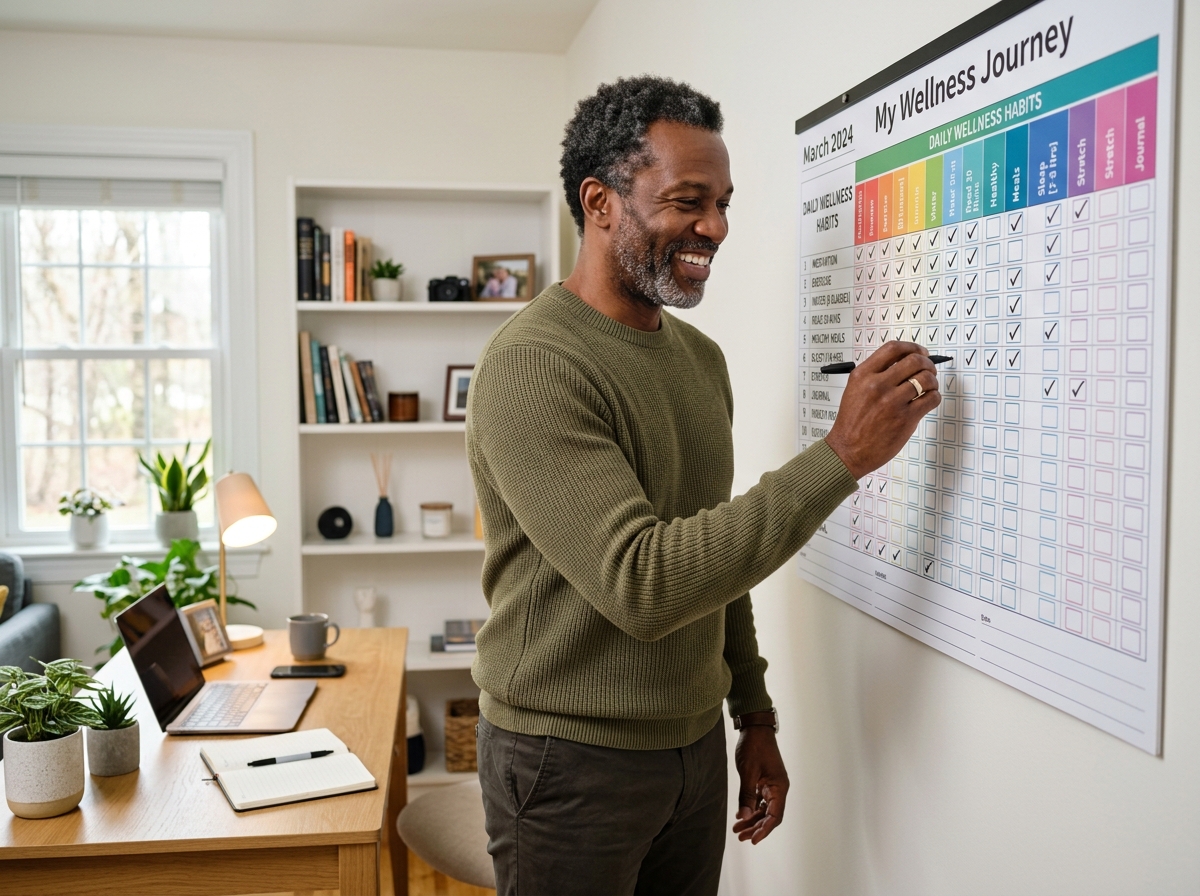
checklist Simple Habit Tracker
You don't need complicated technology. The goal isn't a perfect score; it's to see your pattern and learn from it.
| Day | Walk | Water | Veg | Sleep |
|---|---|---|---|---|
| Mon | ✓ | ✓ | ✓ | ✓ |
| Tue | ✓ | ✓ | — | ✓ |
| Wed | ✓ | ✓ | ✓ | ✓ |
| Thu | — | ✓ | ✓ | ✓ |
| Fri | ✓ | ✓ | ✓ | — |
home Change Your Environment
Your surroundings can make healthy habits easier—or harder. Make healthy choices visible (keep fruit where you can see it). Make unwanted behaviors less convenient (don't keep tempting foods directly in front of you).
Design your environment to support the person you want to become.
restart_alt The "Get Back on Track" Rule
When you miss a habit, don't say: "I've already messed up, so I'll start next month." Instead, ask: "What is the smallest version of this habit I can do today?"
- Normally walk 30 mins? Walk for 10 minutes.
- Normally prep a healthy meal? Prepare one nutritious component.
- Normally meditate 15 mins? Take five slow breaths.
Understand Your Stage of Change
NIDDK describes behavior change as a process that can involve different stages. Understanding where you are can help you choose an appropriate next step.
Contemplation
"I'm Thinking About It."
Learn. Explore. Understand. Don't pressure yourself to change everything immediately.
Preparation
"I'm Getting Ready."
Prepare your environment and your plan. Buy shoes, plan meals, set schedules.
Action
"I'm Doing It."
Build consistency rather than chasing perfection. Show up, repeat, track.
Maintenance
"It's Part of My Life."
Protect the habit and adapt it when life changes. Focus on keeping going.
Common Habit-Formation Mistakes
Trying to change everything at once
→ Start with one or two behaviors.
Setting vague goals
→ Define exactly what you will do.
Depending only on motivation
→ Create routines and reminders.
Ignoring your environment
→ Make healthy choices easier to access.
Giving up after one missed day
→ Return to the habit as soon as possible.
Comparing your progress with someone else
→ Compare with your own starting point.
event_available 7-Day Habit Challenge
Choose
Select one healthy behavior.
Define
Make it specific and measurable.
Prepare
Change your environment to make it easier.
Practice
Complete the behavior.
Repeat
Practice again.
Track
Record your progress.
Review
Ask: What worked? What made it difficult? What should I change?
Turn Knowledge Into Lifestyle
Healthy living is not one decision. It is a collection of decisions repeated over time. You don't need a complete lifestyle transformation today. You need one healthy action you can repeat today.
format_quoteFurther Reading & Research
Verified external sources
Deepen your understanding with these expert resources on habit formation and behavior science.
-
science NIH open_in_new
Creating Healthy Habits
Discusses practical approaches to creating sustainable habits, including planning, modifying cues, social support, and setting realistic goals.
Visit newsinhealth.nih.gov arrow_forward -
science NIDDK open_in_new
Changing Your Habits for Better Health
Explains behavior change as a process and discusses stages including contemplation, preparation, action, and maintenance.
Visit niddk.nih.gov arrow_forward
info All links open in a new tab
Health & Wellness Disclaimer
TheBrightPath Foundation provides fact-based, evidence-informed educational information from credible organizations and research. This content is intended for general educational purposes and is not medical advice. Healthy behavior change is individual. If you have a medical condition or concerns about changing physical activity, nutrition, sleep, or other health behaviors, consult an appropriate qualified healthcare professional.