
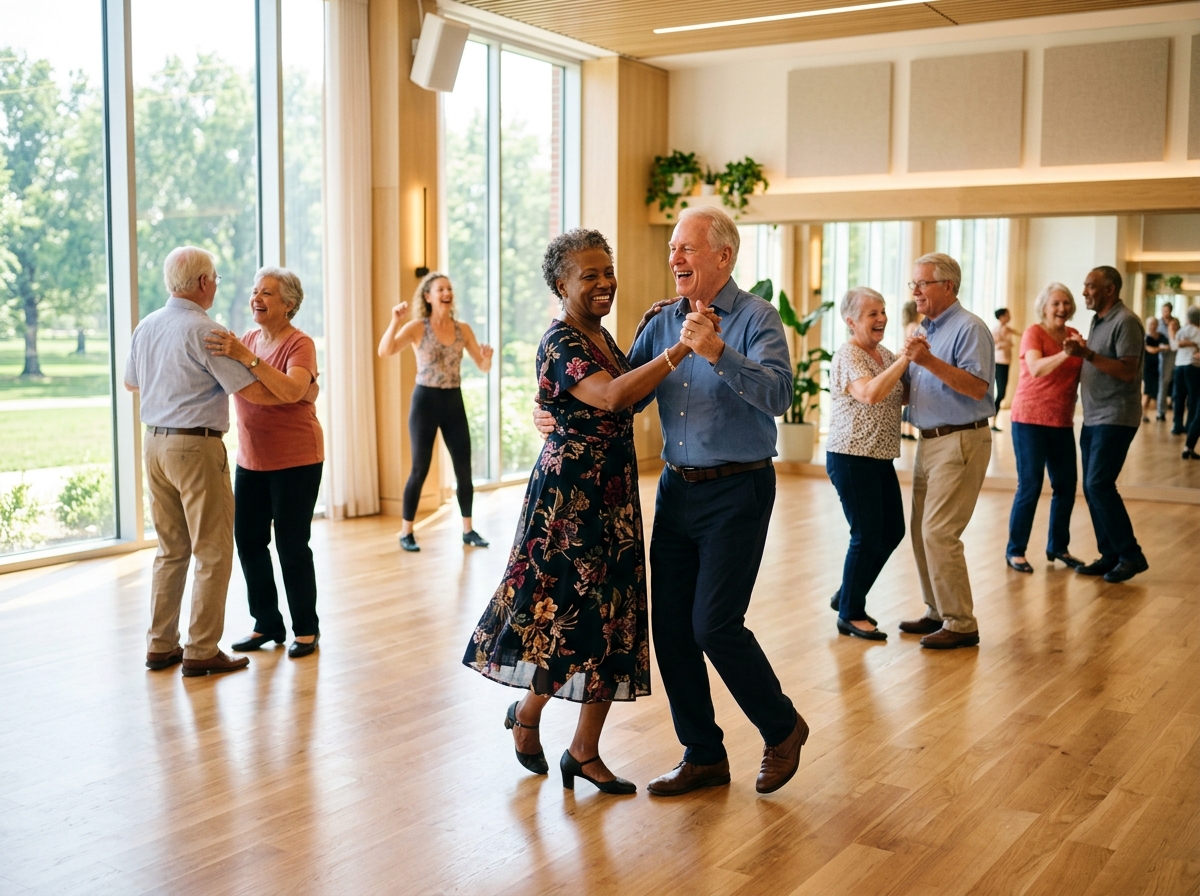
Rhythm and Grace: The Health Benefits of Ballroom Dancing
Exercise does not always have to look like a traditional gym workout. In fact, some of the most potent forms of physical and cognitive conditioning come wrapped in joy, music, and social connection. According to the National Institute on Aging (NIA) and the American Academy of Orthopaedic Surgeons (AAOS), ballroom dancing is a highly effective, multidimensional activity that supports healthy aging, active recovery, and profound neurological health.
Ballroom dancingwhether it's the Waltz, Foxtrot, Tango, or Swingrequires the body and brain to work in perfect synchrony. The NIA explicitly identifies dancing as an activity that simultaneously demands aerobic endurance, dynamic balance, and complex coordination. It is a form of "cross-training" that breaks the repetitive stress of everyday walking or cycling, making it an invaluable addition to any holistic wellness plan.
The Science: Why Dancing is Medicine
Clinical studies continuously reveal that dancing engages more regions of the brain than almost any other physical activity, while simultaneously providing robust cardiovascular conditioning.
Visual Infographic: The Neuroscience of Dance
(Neuroplasticity, Aerobic Capacity, Dynamic Balance, Endorphin Release)
1 Strong Cognitive Protection
The intricate footwork, spatial awareness, and musical timing required in ballroom dancing force the brain to constantly rewire itself. This rapid decision-making promotes neuroplasticitythe brain's ability to form new neural connections. Major long-term studies, including those published in the New England Journal of Medicine, have shown that frequent dancing offers the greatest risk reduction of any physical activity against dementia and Alzheimer's disease (up to a 76% reduction).
2 Agility and Fall Prevention
As outlined by the AAOS, cross-training through varied movement is essential for joint health. Standard walking only moves the body forward (the sagittal plane). Ballroom dancing, however, requires lateral stepping, backward movement, and rapid pivoting (the frontal and transverse planes). This multidirectional movement strengthens stabilizer muscles in the hips and ankles, drastically improving dynamic balance and reducing the likelihood of catastrophic falls.
3 Cardiovascular Endurance
The smooth, sweeping movements of a Waltz or the rapid tempo of a Swing dance act as exceptional cardiovascular workouts. Maintaining proper dance frame (keeping your arms elevated and your posture tall) heavily engages the core and shoulders, while the continuous movement elevates the heart rate into the moderate-to-vigorous aerobic zone recommended by the NIA. This strengthens the heart, improves lung capacity, and helps manage blood pressure.
4 Combats Social Isolation
Social isolation is a critical health risk factor for older adults, often compared to the health detriments of smoking. Ballroom dancing is inherently social. It requires a partner and is typically done in a class or community setting. The physical touch and camaraderie involved trigger the release of oxytocin and endorphins, drastically reducing depression and loneliness while fostering a strong sense of community.
Cross-Training: The AAOS Perspective
The American Academy of Orthopaedic Surgeons heavily promotes "cross-training"combining different types of workouts to prevent repetitive strain injuries. Dancing perfectly complements other activities like brisk walking or strength training.
directions_run Reduces Overuse Risk
If you only walk or cycle, you stress the exact same joints repeatedly. Dancing distributes physical stress across entirely different muscle groups and joint angles, giving overused tendons time to recover.
accessibility_new Postural Alignment
Dance forces you to stand tall, pull your shoulders back, and engage your core. This reverses the "hunched" posture often developed from sitting, alleviating chronic neck and lower back pain.
Watch: The Basics of the Waltz
Learn the foundational box step and proper dance frame posture.