
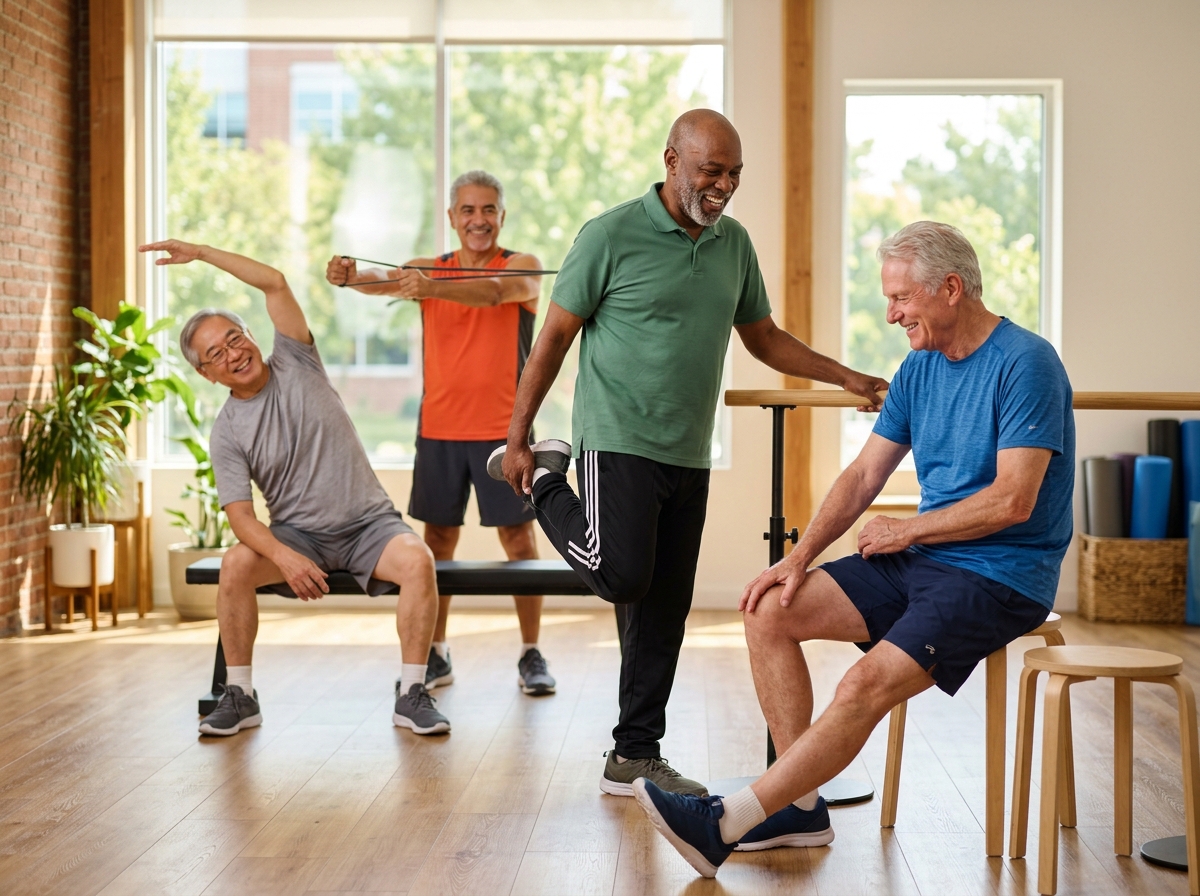
Unlocking Mobility: The Importance of Flexibility
When building a healthy exercise routine, strength training and cardio often get the most attention. But flexibility is also an important part of fitness. According to the American Academy of Orthopaedic Surgeons (AAOS), good flexibility and range of motion can help you move safely and make the most of your strength and endurance.
Regular stretching and flexibility exercises can help keep your joints moving well and make everyday activities easier.
The Science: Why Range of Motion Matters
Flexibility is the ability of a joint, or a series of joints, to move through an unrestricted, pain-free range of motion. The physiological benefits of maintaining this mobility extend far beyond just feeling "limber."
Visual Infographic: The Biomechanics of Stretching
(Muscle Spindles, Tendon Elasticity, Joint Lubrication, Postural Alignment)
1 Severe Injury Prevention
The AAOS highlights that short, tight muscles are highly susceptible to acute injuries, such as tears or strains, when suddenly called upon to perform a task. For example, if your hamstrings are chronically tight, simply reaching down to pick up a heavy box can force your lower back to compensate, leading to severe lumbar strain. Stretching ensures muscles can absorb force dynamically without tearing.
2 Alleviating Chronic Tension and Soreness
Prolonged sitting, emotional stress, and intense exercise all cause muscle fibers to remain in a slightly contracted state. Over time, this leads to painful "knots" (trigger points) and chronic soreness. Stretching stimulates blood flow to these tissues, flushing out metabolic waste products (like lactic acid) and delivering fresh oxygen, which dramatically accelerates recovery and relieves tension.
3 Enhancing Balance and Stability
Good balance requires constant, rapid adjustments from your ankles, hips, and core. If the muscles surrounding your joints are stiff and restricted, your body cannot react quickly enough to a sudden shift in weight. Improving the flexibility of your lower body directly improves your gait, stability, and your ability to prevent catastrophic falls.
Practical Guidelines: How to Stretch Safely
Stretching incorrectly can do more harm than good. The AAOS provides explicit, practical guidance on how to incorporate flexibility training into a balanced weekly program safely.
directions_run Never Stretch "Cold"
Stretching cold muscles is a primary cause of tears. Always perform a 5-10 minute aerobic warm-up (like light walking or arm circles) to increase blood flow and muscle temperature before stretching.
pan_tool Tension, Not Pain
A stretch should feel like mild pulling or tension. If you feel sharp, stabbing pain, or if your muscle starts violently shaking, you have pushed too far. Ease off immediately to prevent a sprain.
timer Hold for 30 Seconds
It takes time for the stretch reflex to relax and allow the muscle fibers to lengthen. Hold static stretches continuously for 30 to 60 seconds without "bouncing" (which can cause micro-tears).
sync Symmetrical Practice
Muscle imbalances lead to postural distortion. If you stretch your right hamstring for 60 seconds, ensure you stretch your left hamstring for exactly the same duration to maintain bilateral alignment.
Integrating Flexibility into Cross Training
The AAOS defines Cross Training as combining aerobic, strength, and flexibility exercises to create a robust, injury-resistant body. Flexibility is the glue that holds this regimen together.
For optimal results, dynamic stretching (moving through a range of motion) should be done before your workout to prepare the joints, while static stretching (holding a pose) should be done after the workout while the muscles are warm and pliable to increase permanent range of motion.
Watch: The 5-Minute Daily Stretch
Follow along with essential daily stretches for the hamstrings, hips, and chest.