
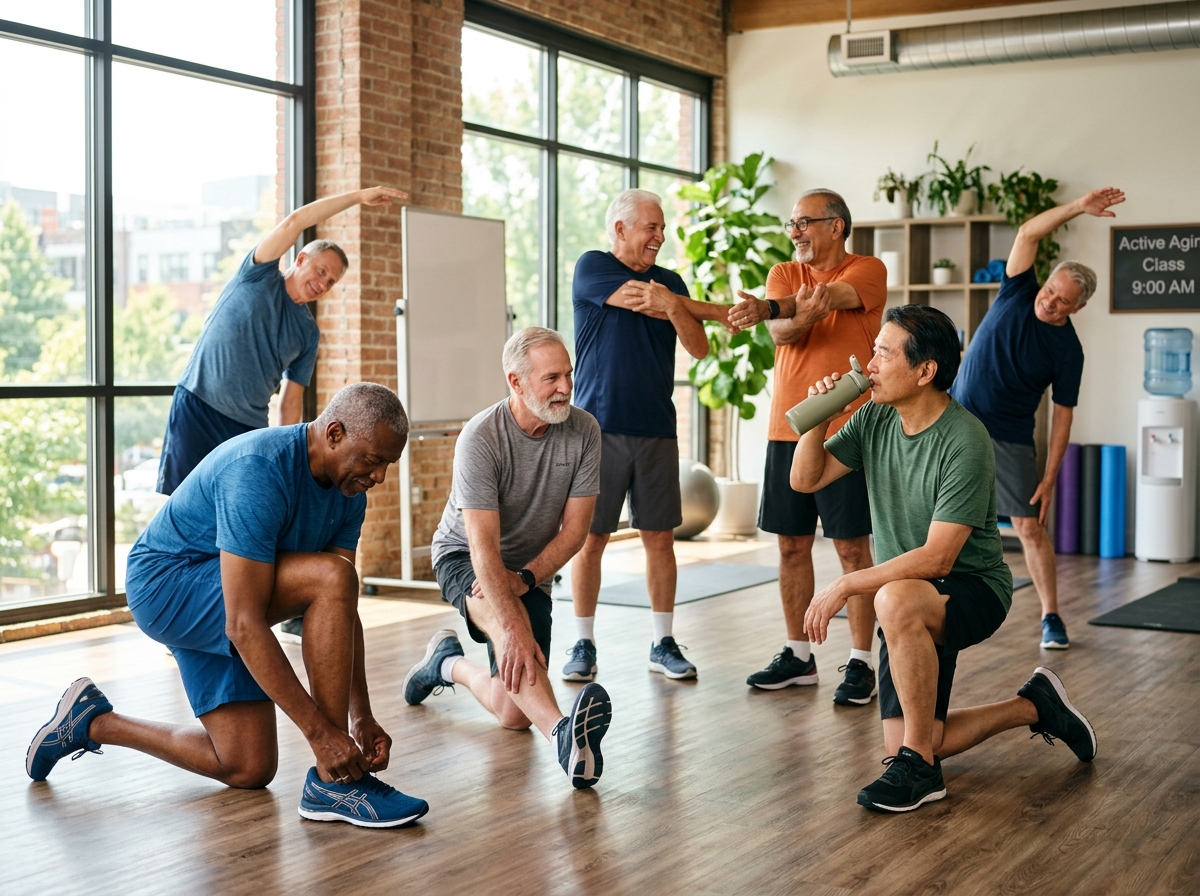
Safeguarding Your Momentum: The Science of Prevention
Staying active is an important part of healthy aging and recovery after prostate cancer treatment. However, an injury can slow your progress and make it harder to stay active. The American Academy of Orthopaedic Surgeons (AAOS) emphasizes that many exercise-related injuries can be prevented by using proper safety techniques.
Injury prevention does not mean avoiding exercise. It means learning how to prepare your body, use proper form, and choose the right equipment. Whether you are walking, lifting weights, or practicing martial arts, these simple safety habits can help protect your muscles, joints, and other tissues.
The Etiology of Injury: Acute vs. Overuse
Injuries generally fall into two categories: acute (a sudden, traumatic event like a fall or sprain) and overuse (a gradual breakdown of tissue over time, like tendonitis). While acute injuries often result from poor environmental awareness or lack of warm-up, overuse injuries stem from repetitive stress without adequate recovery or variety.
Visual Infographic: The Injury Prevention Triangle
(Preparation, Equipment, Biomechanics)
1 The Power of Cross-Training
The AAOS identifies cross-training as one of the most effective strategies for preventing overuse injuries. If you only run or only cycle, you continuously stress the exact same joints, ligaments, and muscle fibers in the exact same plane of motion. Cross-trainingcombining aerobic conditioning, strength training, and flexibility workdistributes physical stress evenly across the entire musculoskeletal system, allowing specific tissues to repair while your overall fitness improves.
2 Preparation: Warm-Ups and Cool-Downs
As noted in AAOS protocols for martial arts and high-intensity activities, the warm-up is non-negotiable. A cold muscle is stiff and prone to tearing. A proper 5-10 minute dynamic warm-up increases core body temperature, dilates blood vessels, and lubricates the joints with synovial fluid. Similarly, a dedicated cool-down prevents blood pooling and safely lowers your heart rate, reducing post-exercise cardiac stress.
3 The Role of Hydration and Equipment
Dehydrated tissues are brittle and fatigue quickly, leading to sloppy biomechanics and an exponentially higher risk of acute injury. Furthermore, appropriate equipmentspecifically proper footwearis your first line of defense against impact injuries. Worn-out shoes fail to absorb shock, transferring the kinetic energy directly into your knees, hips, and lower back.
Practical Guidelines: The Rules of Engagement
Incorporating these evidence-based safety rules into your daily routine is the key to maintaining a lifelong, uninterrupted active lifestyle.
trending_up The 10% Rule
Never increase your physical activitywhether it's weight, duration, or distanceby more than 10% per week. The cardiovascular system adapts faster than tendons and ligaments do; gradual progression ensures connective tissues can keep up.
hearing Listen to Your Body
Learn the difference between "good" pain (dull, widespread muscle fatigue) and "bad" pain (sharp, localized, stabbing sensations in a joint). If you feel sharp pain, stop immediately. Pushing through it guarantees an injury.
water_drop Pre-Hydration
Do not wait until you are thirsty to drink water; by then, you are already dehydrated. Consume 16 ounces of water two hours before activity, and continue sipping throughout your workout to maintain fascial elasticity.
roller_skating Equipment Audits
Athletic shoes should be replaced every 300 to 500 miles, or roughly every six months of regular use. The EVA foam in the midsole breaks down invisibly, completely losing its shock-absorbing properties long before the tread wears out.
Watch: The 5-Minute Dynamic Warm-Up
Prepare your joints and elevate your core temperature safely before any activity.